Quiet Beauty Journal · B2B Market Intelligence · Mexico
Mexico’s K-Beauty Opportunity: The Brands, Products and Buyer Signals to Know
A decision-maker’s guide to K-beauty in Mexico: the Korean skincare brands, standout products and consumer signals shaping buyer attention.
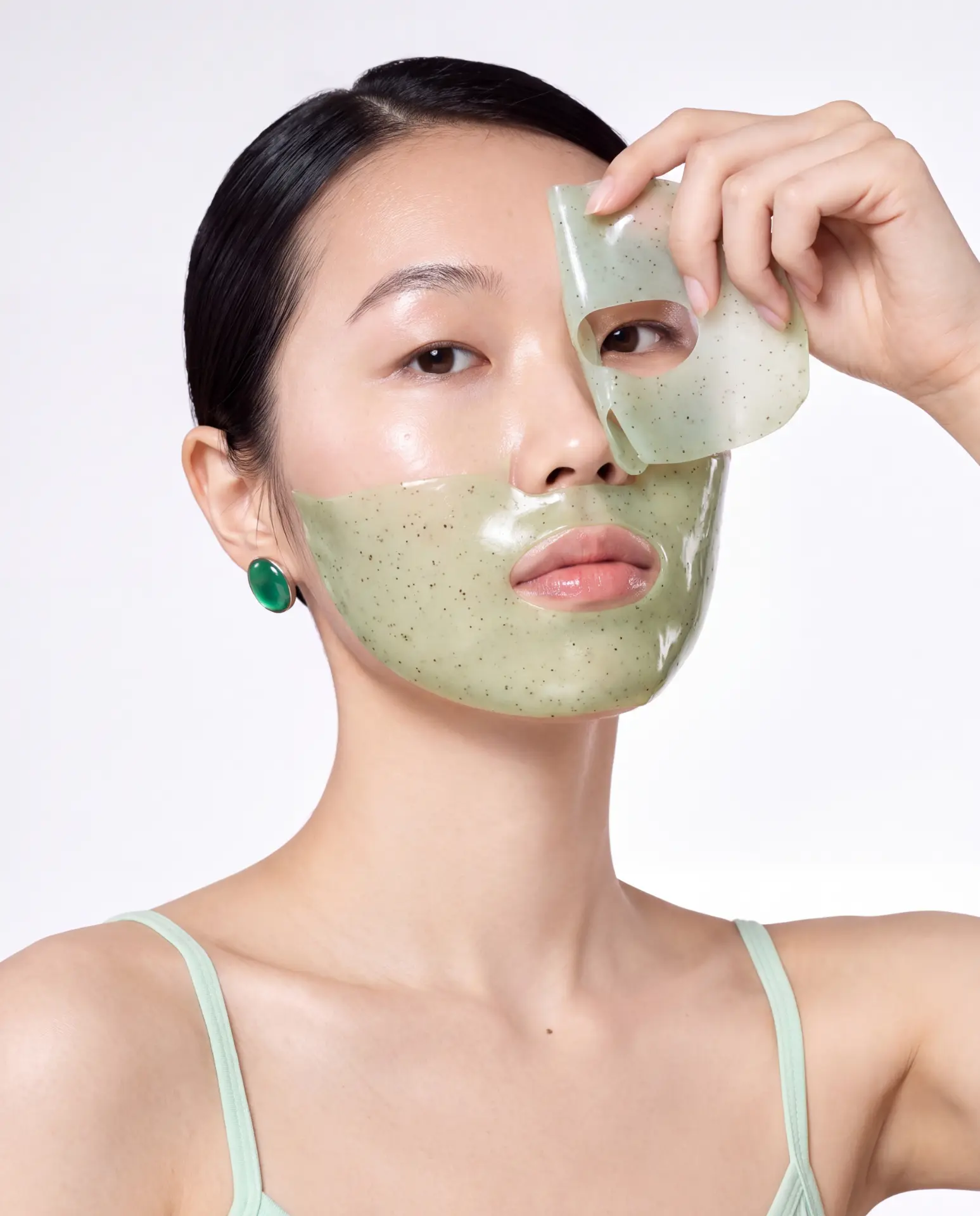
A concise market briefing for beauty founders, commercial leaders, distributors, retailers, hotels and spas.
The K-beauty Mexico market is moving from online curiosity towards a more serious commercial conversation. But attention is not the same as demand—and visibility is not a route to market.
Quiet Beauty reviewed almost 6,000 pieces of public TikTok and Instagram content mentioning 63 Korean beauty brands, representing 353.6 million views. The analysis points to a clear opportunity: Spanish-language audiences are generating more attention than the volume of Spanish-language content would suggest. For brands and buyers, the question is no longer whether Korean skincare is visible in Mexico. It is whether a brand can turn that visibility into a credible, locally relevant and commercially ready offer.
Executive summary
- The opportunity: Spanish and Latin American content represented 3.6% of the sample but generated 10.9% of views.
- The strongest signal: useful demonstrations, clear routines and specific skin needs performed better than broad beauty promises.
- The commercial reality: social momentum may open a conversation, but buyers still require pricing, documentation, samples, lead times and reliable supply.
- The decision: enter with a focused assortment and a local commercial plan—not a global campaign translated into Spanish.
The central finding
Mexico presents a meaningful K-beauty opportunity, but brands need localisation, evidence and wholesale readiness to convert attention into buyer confidence.
01. The market signal is real—but it needs context
Mexico is not simply participating in a global Korean skincare trend. In the Quiet Beauty sample, Spanish and Latin American content accounted for only 3.6% of the material analysed but 10.9% of total views. Median engagement reached 3.24%, compared with 2.55% across the full dataset—a 27% relative difference.
Attention is outrunning content supply
The wider trade context supports taking the market seriously. Mexico’s Ministry of Economy reports US$765 million in 2024 imports for the category covering skincare, sun-care and related preparations. Korea’s official public information service also reported that Korean cosmetics exports to Mexico rose 51% year on year between January and July 2024. Neither figure guarantees success for an individual brand, but together they show why Mexico deserves market-specific planning.
Decision point: Treat Mexico as its own commercial market. Local language, channel fit, climate, pricing and documentation matter more than simply extending a global campaign.
02. Local relevance matters more than volume
A large view count can be impressive while revealing little about independent demand. Some brands in the research benefited from broad creator participation; others relied heavily on official accounts or repeated paid activity. For Mexico beauty buyers, that distinction matters. Brand publishing proves investment in awareness, not necessarily consumer adoption.
Median engagement in the sample
The practical opportunity is not to produce more content for its own sake. It is to answer the questions that local consumers and professional buyers actually have: who the product is for, how it fits into a routine, what makes the formula relevant and whether the brand can supply the market reliably.
Decision point: Separate earned interest from paid reach, then build Spanish-language education around the product’s real use case.
03. Specific needs are stronger than tired beauty shorthand
The research suggests that precise skincare needs are creating healthier signals than broad promises. “Sensitive skin” and “skin barrier” language performed more strongly than generic “anti-ageing” messaging, while heavily used “glass skin” language drew comparatively weak median attention.
Ingredient interest also followed cycles. Saturated conversations such as collagen and PDRN attracted substantial content, but less crowded themes—including zinc and PCA, squalane, mugwort, azelaic acid and panthenol—showed stronger attention relative to content supply. Azelaic acid was especially notable: 128 items generated a median 14,600 views. This is an attention signal, not a clinical claim or proof of sales.
For retailers, spas and hospitality buyers, clarity is valuable. Staff need to understand who a product suits, how it should be used and where it belongs in an assortment. A fashionable ingredient may earn discovery; it cannot replace substantiated claims, compliant materials or a coherent range.
Decision point: Lead with a defined need and credible formulation story. Avoid building the entire proposition around a saturated trend phrase.
04. The Korean skincare brands attracting attention
Brand-level performance revealed two different kinds of value. Established names such as Beauty of Joseon, Anua, SKIN1004, COSRX and Medicube acted as search anchors: consumers already recognise them, so their presence can make a K-beauty assortment easier to understand. But high visibility did not always produce strong attention per item.
A second group delivered stronger efficiency relative to the amount of content around them. Klairs recorded 36,900 median views across 72 analysed items. Haruharu Wonder reached 16,700; Dr. Althea, 11,100; Purito, 10,700; and Celimax, 9,548. Dr.G also showed unusually strong demand relative to limited creator coverage. These are research signals—not a ranking of product quality, current sales or guaranteed performance in Mexico.
Selected high-attention K-beauty brands
The products people named
At product level, several recognisable Korean skincare references stood out in captions and transcripts:
- Beauty of Joseon Relief Sun — 28,895 median views across 22 explicitly named items.
- Round Lab Dokdo line — 13,505 median views across 16 items.
- Haruharu Wonder Black Rice line — 11,200 median views across 45 items.
- SKIN1004 Madagascar Centella Ampoule — 11,000 median views across 29 items.
- Biodance Collagen Mask — 9,407 median views across 31 items.
- VT Cosmetics Reedle Shot — 9,404 median views across 25 items.
- Anua Heartleaf line — 8,129 median views across 35 items.
- Aestura Atobarrier365 — 1,486 median views across 32 items.
The strongest product reference in this subset was Beauty of Joseon Relief Sun, while Round Lab Dokdo, Haruharu Wonder Black Rice and SKIN1004 Centella connected recognisable products with broader routines and ingredient stories. For a buyer, these named references are useful entry points—but the gap between a viral product and a commercially viable assortment remains important.
Decision point: Use recognised Korean skincare brands and hero products to create discovery, then judge the opportunity through local price fit, repeat-purchase potential, documentation, supply and the strength of the wider range.
05. Demonstration is doing more work than promotion
The strongest formats helped audiences see products in context. Shopping-haul content recorded 9,666 median views and 4.29% median engagement. Before-and-after content was less common but reached 24,250 median views. Content longer than two minutes recorded 10,800 median views and 4.68% engagement, challenging the assumption that every effective beauty message must be compressed into a short clip.
Median views by selected format
The lesson is not that every brand needs the same video format. It is that explanation, comparison and demonstration can be more useful than a dense technical monologue. The same principle applies in B2B: product training, approved samples and concise sales materials help buyers make a decision.
Decision point: Invest in assets that show how the product works and where it fits—not only polished campaign imagery.
06. A credible range still wins the buyer conversation
Novelty can attract interest, but Korean skincare buyers in Mexico still need a legible assortment. Serums and ampoules, moisturisers, sunscreens, toners, essences and cleansers formed the familiar architecture of the conversation. A hero product may open the door; a disciplined range gives a buyer confidence that the brand can support repeat purchase and a coherent retail story.
Creator strategy also needs a job. Accounts with 250,000 to one million followers generated 34.5% of total views in the dataset. The smallest accounts delivered the highest engagement relative to their follower base but represented only 1.2% of reach. Larger voices can build awareness; specialist creators can add trust and detail. Neither replaces distribution, stock or buyer follow-up.
Decision point: Present the hero product, the repeat-purchase core and the commercial role of every item. Match creators to awareness or credibility rather than treating influence as the route to market.
What decision-makers should ask before entering Mexico
Social momentum can open a door. A professional buyer still evaluates whether the brand can operate reliably. Before approaching the market, leadership teams should be able to answer:
- Which products are approved for presentation, and why does the range make sense?
- What are the wholesale prices, minimum order quantities and lead times?
- Are product, ingredient, safety and packaging documents complete and current?
- Who supplies and funds samples?
- What stock, import and fulfilment model is genuinely available?
- Which channels fit the brand: hospitality, spa, specialist retail, wholesale or distribution?
- Who owns quotations, buyer questions and follow-up after an introduction?
Quiet Beauty’s B2B Brand Expansion service supports selected brands seeking structured sales representation and buyer outreach. Brands seeking professional visibility without joining the representation programme may separately apply for the Quiet Beauty B2B Wholesale Catalogue. Inclusion is reviewed and is not automatic.
The considered approach
Use market signals to choose what to test. Use commercial readiness to decide whether the brand is ready to approach buyers.
How Quiet Beauty can help
- Expand through B2B: Korean beauty and personal-care brands can apply for B2B Brand Expansion, with structured commercial onboarding, selected buyer outreach, follow-up and reporting across hospitality, spa, retail and professional channels.
- Reach professional buyers: selected brands may separately apply for the Quiet Beauty B2B Wholesale Catalogue. Participation in sales representation or the consumer shop is not required, and inclusion is reviewed rather than automatic.
- Be considered for the B2C edit: our buying team is actively exploring distinctive Korean skincare and beauty brands—from emerging niche houses to established names with a clear point of view. Brands may apply for selective B2C consideration; submission does not guarantee a listing or stock purchase.
For Korean beauty brands
If your range combines a compelling product story with wholesale readiness, reliable supply and complete commercial materials, Quiet Beauty would like to hear from you.
Methodology and limits
This briefing draws on Quiet Beauty’s internal market research covering 10,000 public TikTok and Instagram items collected from 8 July to 13 August 2026. The K-beauty subset contained almost 6,000 items mentioning at least one of 63 identified Korean brands. Product figures include only items that named the reference explicitly in captions or transcripts. Metrics reflect what the platforms reported at collection time.
The collection period was short, with 93% of items gathered between 8 and 24 July. Location information was not available for every item. Searches centred on K-beauty, so Japanese and Chinese beauty results are not directly comparable. Most importantly, views and engagement measure attention—not transactions, orders, revenue or guaranteed buyer interest. Commercial decisions should be tested against current sales data, compliance requirements, landed economics and direct buyer feedback.
Sources and external context
- Data México, Ministry of Economy: skincare, sun-care and related preparations trade profile (2024 data).
- Korea.net: Cosmetics exports to Mexico jump 51% from January to July (11 September 2024, reporting KOTRA data).
A note from Quiet Beauty — This article provides market observations for general information. It is not a sales forecast, legal advice, regulatory advice or a guarantee of commercial results.
Written by Quiet Beauty
Filed 22 September 2026 · 10 min read
Also in this issue
B2B Insights
The B2B Edit · Español
Cómo expandir una marca de belleza asiática o internacional al Reino Unido y Europa
La guía completa de entrada al mercado B2B: normativa cosmética del Reino Unido y la UE, importación, costo puesto en destino, precios mayoristas, distribución y captación de compradores de retail.
The B2B Edit · Market Entry
How to Expand an Asian or International Beauty Brand into the UK and Europe
A complete B2B market-entry guide to UK and EU cosmetics compliance, importing, landed cost, wholesale pricing, distribution and retail buyer acquisition.
The B2B Edit
Beauty Sales Representation vs Distribution: Which Model Fits Your Brand?
Understand how sales representation and wholesale distribution differ before choosing a route to professional buyers.